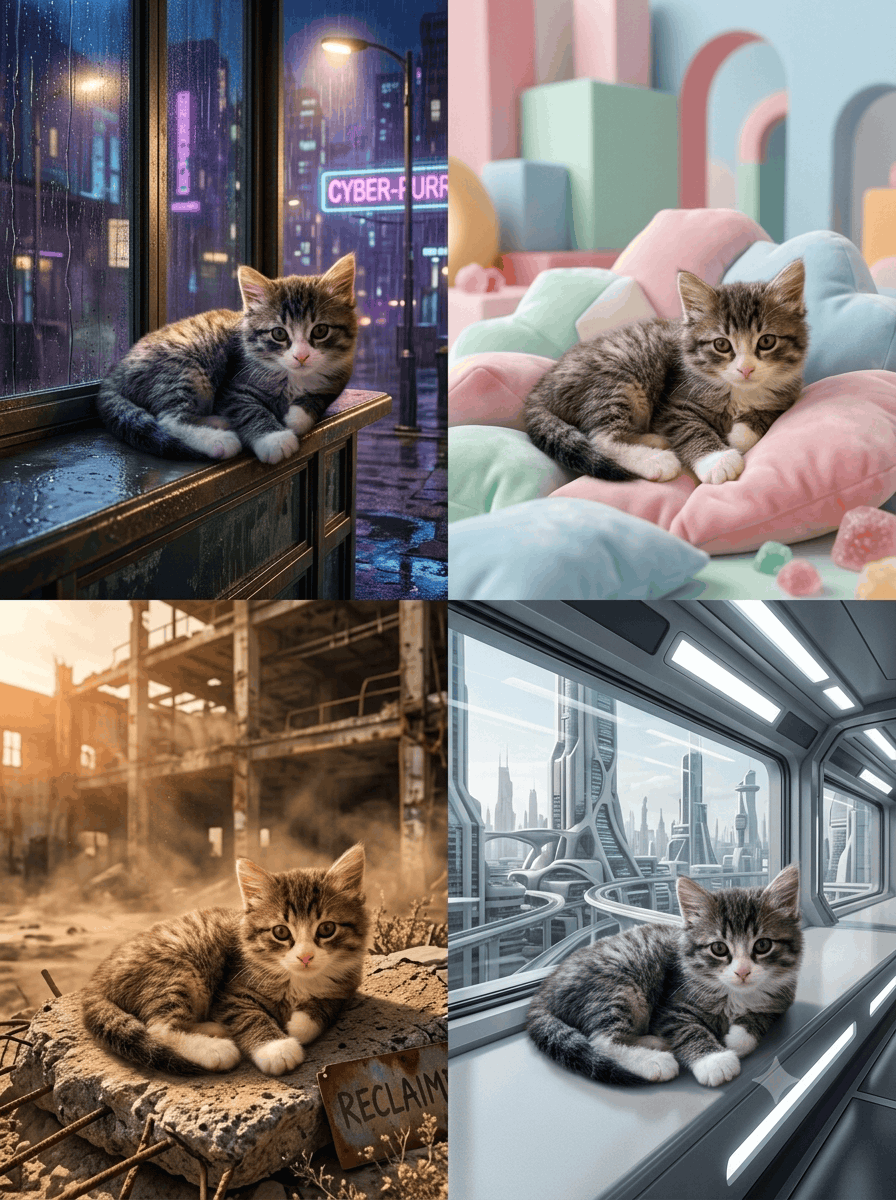
Cinematic Triple-Era Object Timeline: Pristine, Aged, Reclaimed
A single object portrayed across three simultaneous time states—pristine present, weathered decay, and nature-reclaimed future—in a seamless split-canvas composition with consistent geometry and cinematic lighting.
Prompt
{
  "reference": "Preserve the supplied subject's identity, silhouette, proportions, construction, and defining materials across every time-state; show one coherent object, not separate replacements.",
  "concept": "A single cinematic split-canvas portrait reveals the subject across three simultaneous eras: pristine present, visibly weathered passage of time, and a distant future reclaimed by nature. The transitions form one continuous visual timeline.",
  "execution": "Keep the object's geometry and viewpoint aligned across all three states. The pristine zone has intact surfaces and original finish; the aged zone develops physically plausible wear specific to its materials—patina, rust, faded paint, cracked stone, warped wood, dust, or corrosion; the reclaimed zone shows mature roots, moss, lichen, and locally plausible plants growing around and through existing openings without obscuring the object's recognizable outline.",
  "environment": "Build a setting appropriate to the actual subject and its use: surroundings subtly evolve with its timeline, from maintained and active to abandoned and gradually overgrown. Choose vegetation and environmental traces that suit the object's material, scale, and location; keep supporting details purposeful.",
  "composition": "Use a clear three-part horizontal or vertical split within one unified frame, with seamless transitions at the boundaries. Match scale, perspective, camera angle, and object placement precisely so the passage of time reads instantly. Give the subject visual priority and enough surrounding context to communicate each era.",
  "lighting_materials": "Let light and atmosphere evolve naturally across the timeline while remaining directionally coherent: clean, balanced light for the pristine state; subdued, textured light for decay; soft filtered daylight through foliage for reclamation. Render wood grain, metal oxidation, stone fractures, paint loss, soil, and living plants with convincing material detail.",
  "constraints": "No duplicate objects, inconsistent proportions, arbitrary damage, implausible plant growth, floating debris, decorative effects, labels, dates, or text. Keep all three time-states legible and preserve the subject's recognizable identity throughout."
}How to use
1. Open Google's Nano Banana model in your preferred interface (Vertex AI Studio, AI Studio, or via API). 2. Paste the full prompt text into the prompt input field. No reference images are required; the prompt defines the subject, timeline, and composition entirely. 3. Set aspect ratio to 16:9 or 3:2 for horizontal split, or 9:16 / 2:3 for vertical split. Use default temperature (0.7) and top-p (0.95) for balanced creativity. 4. Generate 2-4 variations to compare timeline coherence. 5. Review outputs for consistent object identity, plausible material aging, and seamless transitions across the three zones.
- Model
- Nano Banana
- Category
- Scenes
- Styles
- CinematicPhotorealistic
More inspiration
Related prompts sharing this model, category, styles or tags.